I've let this blog atrophy for a long time...I'll get back to more full-fledged entries in due time.
For now, I've been enjoying this vinyl record shop I found in Lincoln Park. I got a copy of this record, The Visitor by Jim O'Rourke, and it sounds fantastic - great music for blasting through the apartment while cleaning
Saturday, August 6, 2011
Thursday, October 21, 2010
Edwyn Collins: Losing Sleep
The fact that Edwyn Collins is even alive is remarkable, to say nothing of his ability to make evocative music. It has been nearly 30 years since he pioneered "indie rock" as we know it with his band Orange Juice, and 15 years since he topped charts worldwide with the utterly perfect "A Girl Like You." Now in his 50s, Collins has released one of 2010's best albums, the tight and tuneful Losing Sleep. He enlists an impressive guest roster, including members of Franz Ferdinand and Drums, to list but a few. The title track, "Do It Again," and "In Your Eyes" are rich, memorable numbers that condense all of Edwyn's fascination with northern soul, 60s guitar pop a la the Beatles and the Byrds, and Motown into pop perfection. He may no longer have the ability to play his distinctive guitar, but his majestic voice and melodic sense are more than in tact, for which we can all be thankful.
Find it here: http://www.mediafire.com/?c21w29ouy74wtr4
Wednesday, October 20, 2010
Over/Under: Radiohead and Long Fin Killie
Overrated: Radiohead, Kid A (Capitol, 2000)
British novelist and amateur rock critic Nick Hornby is not often someone I agree with. His inflated opinions of Badly Drawn Boy and Marah, for instance, are vinegar enough to drive away any proverbial flies. Yet, the frozen hands on his broken rock criticism clock were in perfect alignment with reality regarding Radiohead's "masterpiece," Kid A.
Hornby's argument from rock purist grounds may not have been the best means to his end of deflating the Kid A hype balloon, but let's pass over that and try to figure out what exactly is wrong with Kid A. When I recently formulated a list of the most overrated rock records, it occurred to me that, in many case, an overrated record suffers from an outsized reputation and/or backstory: that is, its actual music is often eclipsed by the critic's breatheless banter about the band's battle against the corporate mainstream (see: Wilco, Yankee Hotel Foxtrot), about the band's commitment to "saving rock" (see: The Strokes, Is This It?), or about the artist's overall reputation rather than the merits of the album at hand (see: any Bob Dylan record after the mid-1970s). Kid A, though, perhaps bests them all in this regard.
Central to the "classic" status of Kid A is the presumption that it says something about modern society. Its predecessor, OK Computer, had dissected popular fascination with technology and mechanical organization, culminating with its narrator pleading for "no alarms and no surprises, please" as he argues that his predictable, boring life is somehow preferable to anything spontaneous. Whatever OK Computer's faults (and there are several), the album had a clear, coherent message. The gap between its preachiness and Kid A's nothingness is perhaps akin to the gulf separating The Mothers Of Invention's peerless We're Only In It For The Money from band leader Frank Zappa's insipid Lumpy Gravy. That is, just because an artist has the capacity to make a (brilliant) topical statement about the world does not mean that every one of his records contains said statement.
Kid A is a willfully obtuse record. It forgoes the guitar-pop heroics and gorgeous tenor vocals of the band's mid-90s output in favor of cool, calculated electronica. It pursues this tack in order to defy expectation or make the "difficult" artistic statement that we have come to expect of bands either at or already past their third LP. While there's nothing wrong with such motives, the decision that Radiohead made simply does not play to the band's strengths. Underworld had pioneered dark British electronica almost a decade earlier with Dubnobasswithmyheadman and Long Fin Killie (see below) had already formed, churned out three jazzily inflected records in the mid-90s; Kid A was not exactly blazing a new trail. Nor was it a peak example of the electronica genre: Stylus Magazine's (RIP) Nick Southall once described Kid A as an electronica record mixed like a rock record. I think this is a spot-on assessment. Kid A has none of the minor aural details, complex textures, or (most obviously) melodies that characterizes the best, most memorable electronica.
Opener "Everything In Its Right Place" hovers around a single rudimentary synth pattern. The title track is an impenetrable haze that might have been "weird" if Tubular Bells hadn't been released decades earlier. "The National Anthem" is an amateurish vamp nearly drowned by its squawking horns. Other lowlights include the bland, wordless "Treefingers," and the highly derivative "Idioteque" which plays like a carbon copy of Killie's "Lipstick." Collectively, these songs do not even come close to communicating the assumed message of alienation and dissatisfaction with modernity that pervades the rest of the band's work. Free of any discernable lyrics/vocals from Thom Yorke, which had previously driven both OK Computer and The Bends the pressure for communicating the band's ideas is transferred to the accompanying music, and it does not deliver.
Radiohead lost the plot after this record. They never fully reclaimed the muse that led them during the 90s. Even after returning to guitars, the band seemed to have abandoned strong songwriting: it's no wonder that their strongest song of the past 10 yeas is "Nude," an OK Computer-era outtake. Kid A (and it successors) is the sound of, in the words of Trouser Press, "an album created to fulfill expectations the band doesn't necessarily share."
Find it here: http://www.mediafire.com/?gwmzy4dnn2r
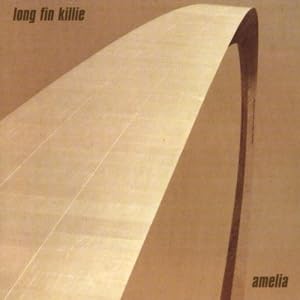
Underrated: Long Fin Killie, Amelia (Too Pure, 1998)
British novelist and amateur rock critic Nick Hornby is not often someone I agree with. His inflated opinions of Badly Drawn Boy and Marah, for instance, are vinegar enough to drive away any proverbial flies. Yet, the frozen hands on his broken rock criticism clock were in perfect alignment with reality regarding Radiohead's "masterpiece," Kid A.
Hornby's argument from rock purist grounds may not have been the best means to his end of deflating the Kid A hype balloon, but let's pass over that and try to figure out what exactly is wrong with Kid A. When I recently formulated a list of the most overrated rock records, it occurred to me that, in many case, an overrated record suffers from an outsized reputation and/or backstory: that is, its actual music is often eclipsed by the critic's breatheless banter about the band's battle against the corporate mainstream (see: Wilco, Yankee Hotel Foxtrot), about the band's commitment to "saving rock" (see: The Strokes, Is This It?), or about the artist's overall reputation rather than the merits of the album at hand (see: any Bob Dylan record after the mid-1970s). Kid A, though, perhaps bests them all in this regard.
Central to the "classic" status of Kid A is the presumption that it says something about modern society. Its predecessor, OK Computer, had dissected popular fascination with technology and mechanical organization, culminating with its narrator pleading for "no alarms and no surprises, please" as he argues that his predictable, boring life is somehow preferable to anything spontaneous. Whatever OK Computer's faults (and there are several), the album had a clear, coherent message. The gap between its preachiness and Kid A's nothingness is perhaps akin to the gulf separating The Mothers Of Invention's peerless We're Only In It For The Money from band leader Frank Zappa's insipid Lumpy Gravy. That is, just because an artist has the capacity to make a (brilliant) topical statement about the world does not mean that every one of his records contains said statement.
Kid A is a willfully obtuse record. It forgoes the guitar-pop heroics and gorgeous tenor vocals of the band's mid-90s output in favor of cool, calculated electronica. It pursues this tack in order to defy expectation or make the "difficult" artistic statement that we have come to expect of bands either at or already past their third LP. While there's nothing wrong with such motives, the decision that Radiohead made simply does not play to the band's strengths. Underworld had pioneered dark British electronica almost a decade earlier with Dubnobasswithmyheadman and Long Fin Killie (see below) had already formed, churned out three jazzily inflected records in the mid-90s; Kid A was not exactly blazing a new trail. Nor was it a peak example of the electronica genre: Stylus Magazine's (RIP) Nick Southall once described Kid A as an electronica record mixed like a rock record. I think this is a spot-on assessment. Kid A has none of the minor aural details, complex textures, or (most obviously) melodies that characterizes the best, most memorable electronica.
Opener "Everything In Its Right Place" hovers around a single rudimentary synth pattern. The title track is an impenetrable haze that might have been "weird" if Tubular Bells hadn't been released decades earlier. "The National Anthem" is an amateurish vamp nearly drowned by its squawking horns. Other lowlights include the bland, wordless "Treefingers," and the highly derivative "Idioteque" which plays like a carbon copy of Killie's "Lipstick." Collectively, these songs do not even come close to communicating the assumed message of alienation and dissatisfaction with modernity that pervades the rest of the band's work. Free of any discernable lyrics/vocals from Thom Yorke, which had previously driven both OK Computer and The Bends the pressure for communicating the band's ideas is transferred to the accompanying music, and it does not deliver.
Radiohead lost the plot after this record. They never fully reclaimed the muse that led them during the 90s. Even after returning to guitars, the band seemed to have abandoned strong songwriting: it's no wonder that their strongest song of the past 10 yeas is "Nude," an OK Computer-era outtake. Kid A (and it successors) is the sound of, in the words of Trouser Press, "an album created to fulfill expectations the band doesn't necessarily share."
Find it here: http://www.mediafire.com/?gwmzy4dnn2r
Underrated: Long Fin Killie, Amelia (Too Pure, 1998)
Long Fin Killie were a short-lived Scottish band from the mid-1990s. Singer/guitarist/violinist Luke Sutherland went on to become a successful novelist, but prior to his writing escapades, he helmed a virtuosic group of musicians who played minimalist rock with jazzy precision. Largely foregoing the extended sonic explorations of their first two LPs, Amelia is a highly economical record that packs an enormous number of details and rich melodies into its compact aesthetic. Opener "British Summertime" is a warm, plaintive number that oscillates with Sutherland's rich, range-y vocals and lyrics, and the band's interlocking guitar attack and muscular rhythm section. "Lipstick" is a proto-mechanical rock number whose distinctive drum sound Radiohead were certainly aware of a few years later.
Enjoy it here: http://www.mediafire.com/?mgn3ojwoxnc
Tuesday, October 19, 2010
Working For A Nuclear Free City: Jojo Burger Tempest
00s rock was dominated by revivalists. The Strokes et al excavated 70s NYC garage and late 60s Nuggets pop, Justin Timberlake and Timbaland mined the rich vein of Duran Duran's Rio, and Arctic Monkeys hauled Britishness out from its post-Pulp/Blur slumber. Within this wider context of reinvention, of filling old flasks with new wine, Manchester's awkwardly named Working For A Nuclear Free City explored an increasingly neglected slice of the UK's pop history: late 80s/early 90s Madchester.
WFANFC debuted in 2006 with a self-titled LP heavily indebted to both the Happy Mondays and The Stone Roses. The Mondays, especially, had recently enjoyed a renaissance following Shaun Ryder's collaboration with Gorillaz and the band's belated reunion. WFANFC meshed those loping, ecstasy-laced beats with serene guitar lines and newfangled electronics. Though they did not yet set the world ablaze, listeners could nevertheless hear them working out the kinks of a complex aesthetic. The double LP follow-up, Businessmen & Ghosts, was alas rendered unlistenably long by its inclusion of both the entire debut and the Rocket EP out of courtesy for US listeners who had not been able to (legally) obtain them.
Their third LP, then, is reason to rejoice. It is another double album, but manageable at a mere 90 minutes. Disc 1 blazes through 17 diverse cuts, many of them instrumental and the remainder with the band's breathy, Elliott Smith styled vocals. Disc 2 is a 33-minute suite, the title track, composed of excerpts from the recording sessions. In keeping with similarly avant-garde suites, like Ghost's "Hemicylic Anthelion" or The La's "Looking Glass," it changes shape not out of whim, but out of necessity: its changes prevent the piece from ever bordering on being dull, and follow suprisingly logical patterns.
You can enjoy it here:
Working For A Nuclear Free City: Jojo Burger Tempest: http://www.mediafire.com/?lo3ywmi44pwljxj
--
Other links to pieces mentioned in this article:
Working For A Nuclear Free City: Working For A Nuclear Free City (UK): http://www.mediafire.com/?mrjkxnmnmm1
Ghost: In Stormy Nights: http://www.mediafire.com/?d2ztjjngaee
The La's: The La's: http://www.mediafire.com/?y4gmolululd
Duran Duran: Rio: http://hotfile.com/dl/13953305/f9263d2/Duran_Duran-Rio-2CD-Remastered_Limited_Edition-2009-D2H__Shareconnector.eu.tt.rar.html
The Stone Roses: The Stone Roses: http://www.filestube.com/62e4e349135edf6703ea/go.html
Happy Mondays: Pills N' Thrills N' Bellyaches: http://www.mediafire.com/?oz05myxdjxz
Gorillaz: "DARE": http://www.mediafire.com/?53semczbdzo
Monday, October 18, 2010
Revamp
I have decided to redo this blog completely. It will no longer focus on YGO since I am on hiatus from the game. So, instead: I will channel my energies into music reviews. I used to play piano and guitar and have a panoramic album collection.
I will make a daily feature called "Over/Under," in which I look at one overrated album and one underrated album. Today will be my first entry.
Overrated:
Wilco, Yankee Hotel Foxtrot (Nonesuch, 2002)

I have tried to like Wilco longer and harder than I have tried to like any other band; hell, they even hail from my current home city. My persistence, however, has not paid off. Wilco are an average band that was briefly elevated to above-average by the presence of Jay Bennett on three albums spanning the late 1990s and early 2000s. They were mediocre prior to his arrival (debut "A.M." being a sub-Uncle Tupelo rehash) and went right on back to being so after his departure (see any of the band's exhausted/exhausting late 2000s albums). "Yankee Hotel Foxtrot" is the finale of a loose trilogy which began with 1996's 70s-loving "Being There" and then continued through 1999's synth-happy "Summerteeth." Contrary to the conventional narrative that Wilco "reinvented" its sound with each album, YHF (as I will call "Yankee Hotel Foxtrot" from hereon) is actually a reconstruction of the band's previous two epics, "Misunderstood" and "Sunken Treasure" which began Discs 1 and 2, respectively, of "Being There." Hence my usage of the "trilogy" construct.
Jim O'Rourke's fanciful, spacey mix definitely helps to differentiate the material on YHF from those two earthen cuts from its 1996 predecessor, and even from the pop of "Summerteeth," but it does not fully disguise how ordinary and bland much of the underlying material is. If you have read anything about YHF, you likely know its legendary backstory: how it was rejected as "too un-commercial" by long-time label Reprise Records, how the band refused to change it and instead shopped it around, and how Nonesuch picked it up and turned it into Wilco's career best-seller and a mainstay of "Best of the Decade" lists. Its coincidentally topical lyrics, which seem to refer obliquely to 9/11, also help in that regard.
What's baffling, however, especially for longtime listeners of Wilco, is what exactly alarmed Reprise and made them reject it: after all, to these ears, it really is not much more than a more sleekly produced "Being There," and much of its material is straightforward guitar-pop a la Gin Blossoms.
Let's take a look at it track by track.
1. I Am Trying To Break Your Heart
The most famous cut by far, containing the band's most memorable lyric, and the basis for the title of a documentary about the band. It begins its 7+ minutes with some electronic sounds which herald another change of artistic direction for a band already known for its restlessness: will this be Wilco's "Kid A"? The opener, however, is a red herring in two ways, firstly in that it is not nearly as daring or as obtuse as its opening would portend, and secondly in that it really says precious little about what will follow it on the album.
Glen Kotche's drums shuffle and oscillate (one of the few instances where he's given something to do with his considerable chops), the same few notes repeat ad nauseam, and frontman Jeff Tweedy intones that he's an American aquarium drinker etc. What does it all mean? It's "Misunderstood" mk. II, only hollowed out and filled up with awkward phrasings and hamfisted cacophony. The song itself isn't much beyond its layers of processed noise. 420+ seconds pass, the digital dust settles, and we are left trying to figure out whose heart was broken and why. Was he just "misunderstood," indeed? Whatever its aftermath, the song's title, so paradoxically full of cheekiness and self-seriousness, seems to indicate that we have stumbled upon an Important Album. Let's move on...
2. Kamera
After making it through the opener's storm, we're treated to this slice of purely conventional pop. Chimey guitars bounce, the rhythm bobs, and Tweedy muses about his camera. I should note that the sequencing choice here reflects an annoying tendency by Wilco, dating all the way back to 1996 and continuing even to the present: that is, juxtaposing a "difficult" song with an "easy" song. Hence "Being There" followed "Misunderstood" with a string of Stones-y rockers, and 2004's "A Ghost Is Born" followed the unlistenable "Less Than You Think" with the disarming "Late Greats."
In any case, "Kamera" is so lightweight it just drifts away.
3. Radio Cure
Back to the seriousness drawing-board. "Radio Cure" is leaden, slow, and boring. It does not even possess the interesting motifs that nearly salvaged the "I Am Trying..." trainwreck. Its refrain ("Distance has no way of making love understandable") hints at an album-long concern with communication breakdown, but the message loses much of its coherence due to the interjection of songs like, well, "Kamera," and the weakeness of material inherent in songs like "Radio Cure."
4. War On War
A more cheerful rocker, despite its title and lyrics attempting to up the seriousness quotient again. Some warbly synths intrude near the end. Not much else to say about this one, other than I enjoy it more than most other cuts here.
5. Jesus, Etc.
Violins! This song has a nice melody and some tender, plaintive lyrics that reinforce the tangential 9/11 theme I alluded to earlier. But at this point, let's take stock of what's happened so far (since we are about halfway through, after all):
-Cumbersome, overlong red-herring opener "(I Am Trying...)"
-String of conventional gentle pop ("Kamera," "War On War," "Jesus, Etc.")
-Forgettable dirge ("Radio Cure")
6. "Ashes Of American Flags"
Shapeless and tuneless. It swirls, contracts, expands, and goes nowhere. Like "I Am Trying..." it suffers from a deficient melody attempting to hide under too many effects. Lyrics are ok, however.
7. "Heavy Metal Drummer"
The most hated song, natch, since it is the most blatantly commercial. What's odd, though, is that it really is a more accurate portrait of this album than "I Am Trying..." or "Ashes..." are. Clean guitar lines, a touch of synth, and cheeky lyrics: this is quintessential YHF. It is enjoyable, but it won't change the world.
8. "I Am The Man Who Loves You"
Ugh. My least favorite cut. Uncomfortable, fuzzy guitar line ripped from the "White Album" or maybe a Pavement demo, awkward lyrics, and a cumbersome attempt at a solo (which alas heralded the band's fascination with sub-Neil Young shredding on later albums).
9. "Pot Kettle Black"
Another chimey, no-frills pop rocker. A nice brush of pedal steel, melodic acoustic work, and clever lyrics. However enjoyable, though, it really does not mesh with the hagiographic reviews of this album as a seminal, wholly innovative achievement...
10. "Poor Places"
The most "difficult" cut, which reprises the cacophony of the opener with a full-on descent into aural chaos and radio waves. It has a slightly better tune than its stylistic predecessor, however.
11. "Reservations"
Another very long song, but extremely conventional. It is a soft, plaintive ballad which tacks on 2 minutes of useless organ noise/studio ambling. With that, the album rides off into the sunset.
I do not dislike this album (overrated =/= bad) but I do not understand the hype at all. It is a guitar pop album that makes a few isolated attempts at artsy "experimental" rock which is not that experimental at all. It sells itself short on two fronts, by first making its experiments too serious and overwrought, when the band simply does not excel in that regard, and second by making its conventional pop songs all too conventional and predictable, as if out of pity for the staid Wilco listener who has to also sit through the experiments. Accordingly, the album's coherence suffers and it succeeds at being both derivative as a derivative album and derivative as an "experimental" album.
Underrated: Arctic Monkeys, Humbug (Domino, 2009)

Arctic Monkeys' first two albums were hyperkinetic teenage barnstormers strung barely to the earth by the biting, lucid lyrical poetry of frontman Alex Turner. But with their third album, almost to the oblivion of the music press, the band transformed into a sinister dark-pop outfit with range and maturity far beyond its years. Turner's range on this record is breathtaking. He melds his Sheffield accent with a new weapon in the form of a Edwyn Collins-esque bass voice. Guitar solos shoot out of nowhere and then promptly high-tail it back into the wilderness. The drumming is superhuman in spots. This is the reinvention that The Strokes, The White Stripes...hell, all the The bands of the 00s, never accomplished. And all from a ragtag bunch that hasn't even turned 25 yet.
I will make a daily feature called "Over/Under," in which I look at one overrated album and one underrated album. Today will be my first entry.
Overrated:
Wilco, Yankee Hotel Foxtrot (Nonesuch, 2002)

I have tried to like Wilco longer and harder than I have tried to like any other band; hell, they even hail from my current home city. My persistence, however, has not paid off. Wilco are an average band that was briefly elevated to above-average by the presence of Jay Bennett on three albums spanning the late 1990s and early 2000s. They were mediocre prior to his arrival (debut "A.M." being a sub-Uncle Tupelo rehash) and went right on back to being so after his departure (see any of the band's exhausted/exhausting late 2000s albums). "Yankee Hotel Foxtrot" is the finale of a loose trilogy which began with 1996's 70s-loving "Being There" and then continued through 1999's synth-happy "Summerteeth." Contrary to the conventional narrative that Wilco "reinvented" its sound with each album, YHF (as I will call "Yankee Hotel Foxtrot" from hereon) is actually a reconstruction of the band's previous two epics, "Misunderstood" and "Sunken Treasure" which began Discs 1 and 2, respectively, of "Being There." Hence my usage of the "trilogy" construct.
Jim O'Rourke's fanciful, spacey mix definitely helps to differentiate the material on YHF from those two earthen cuts from its 1996 predecessor, and even from the pop of "Summerteeth," but it does not fully disguise how ordinary and bland much of the underlying material is. If you have read anything about YHF, you likely know its legendary backstory: how it was rejected as "too un-commercial" by long-time label Reprise Records, how the band refused to change it and instead shopped it around, and how Nonesuch picked it up and turned it into Wilco's career best-seller and a mainstay of "Best of the Decade" lists. Its coincidentally topical lyrics, which seem to refer obliquely to 9/11, also help in that regard.
What's baffling, however, especially for longtime listeners of Wilco, is what exactly alarmed Reprise and made them reject it: after all, to these ears, it really is not much more than a more sleekly produced "Being There," and much of its material is straightforward guitar-pop a la Gin Blossoms.
Let's take a look at it track by track.
1. I Am Trying To Break Your Heart
The most famous cut by far, containing the band's most memorable lyric, and the basis for the title of a documentary about the band. It begins its 7+ minutes with some electronic sounds which herald another change of artistic direction for a band already known for its restlessness: will this be Wilco's "Kid A"? The opener, however, is a red herring in two ways, firstly in that it is not nearly as daring or as obtuse as its opening would portend, and secondly in that it really says precious little about what will follow it on the album.
Glen Kotche's drums shuffle and oscillate (one of the few instances where he's given something to do with his considerable chops), the same few notes repeat ad nauseam, and frontman Jeff Tweedy intones that he's an American aquarium drinker etc. What does it all mean? It's "Misunderstood" mk. II, only hollowed out and filled up with awkward phrasings and hamfisted cacophony. The song itself isn't much beyond its layers of processed noise. 420+ seconds pass, the digital dust settles, and we are left trying to figure out whose heart was broken and why. Was he just "misunderstood," indeed? Whatever its aftermath, the song's title, so paradoxically full of cheekiness and self-seriousness, seems to indicate that we have stumbled upon an Important Album. Let's move on...
2. Kamera
After making it through the opener's storm, we're treated to this slice of purely conventional pop. Chimey guitars bounce, the rhythm bobs, and Tweedy muses about his camera. I should note that the sequencing choice here reflects an annoying tendency by Wilco, dating all the way back to 1996 and continuing even to the present: that is, juxtaposing a "difficult" song with an "easy" song. Hence "Being There" followed "Misunderstood" with a string of Stones-y rockers, and 2004's "A Ghost Is Born" followed the unlistenable "Less Than You Think" with the disarming "Late Greats."
In any case, "Kamera" is so lightweight it just drifts away.
3. Radio Cure
Back to the seriousness drawing-board. "Radio Cure" is leaden, slow, and boring. It does not even possess the interesting motifs that nearly salvaged the "I Am Trying..." trainwreck. Its refrain ("Distance has no way of making love understandable") hints at an album-long concern with communication breakdown, but the message loses much of its coherence due to the interjection of songs like, well, "Kamera," and the weakeness of material inherent in songs like "Radio Cure."
4. War On War
A more cheerful rocker, despite its title and lyrics attempting to up the seriousness quotient again. Some warbly synths intrude near the end. Not much else to say about this one, other than I enjoy it more than most other cuts here.
5. Jesus, Etc.
Violins! This song has a nice melody and some tender, plaintive lyrics that reinforce the tangential 9/11 theme I alluded to earlier. But at this point, let's take stock of what's happened so far (since we are about halfway through, after all):
-Cumbersome, overlong red-herring opener "(I Am Trying...)"
-String of conventional gentle pop ("Kamera," "War On War," "Jesus, Etc.")
-Forgettable dirge ("Radio Cure")
6. "Ashes Of American Flags"
Shapeless and tuneless. It swirls, contracts, expands, and goes nowhere. Like "I Am Trying..." it suffers from a deficient melody attempting to hide under too many effects. Lyrics are ok, however.
7. "Heavy Metal Drummer"
The most hated song, natch, since it is the most blatantly commercial. What's odd, though, is that it really is a more accurate portrait of this album than "I Am Trying..." or "Ashes..." are. Clean guitar lines, a touch of synth, and cheeky lyrics: this is quintessential YHF. It is enjoyable, but it won't change the world.
8. "I Am The Man Who Loves You"
Ugh. My least favorite cut. Uncomfortable, fuzzy guitar line ripped from the "White Album" or maybe a Pavement demo, awkward lyrics, and a cumbersome attempt at a solo (which alas heralded the band's fascination with sub-Neil Young shredding on later albums).
9. "Pot Kettle Black"
Another chimey, no-frills pop rocker. A nice brush of pedal steel, melodic acoustic work, and clever lyrics. However enjoyable, though, it really does not mesh with the hagiographic reviews of this album as a seminal, wholly innovative achievement...
10. "Poor Places"
The most "difficult" cut, which reprises the cacophony of the opener with a full-on descent into aural chaos and radio waves. It has a slightly better tune than its stylistic predecessor, however.
11. "Reservations"
Another very long song, but extremely conventional. It is a soft, plaintive ballad which tacks on 2 minutes of useless organ noise/studio ambling. With that, the album rides off into the sunset.
I do not dislike this album (overrated =/= bad) but I do not understand the hype at all. It is a guitar pop album that makes a few isolated attempts at artsy "experimental" rock which is not that experimental at all. It sells itself short on two fronts, by first making its experiments too serious and overwrought, when the band simply does not excel in that regard, and second by making its conventional pop songs all too conventional and predictable, as if out of pity for the staid Wilco listener who has to also sit through the experiments. Accordingly, the album's coherence suffers and it succeeds at being both derivative as a derivative album and derivative as an "experimental" album.
Underrated: Arctic Monkeys, Humbug (Domino, 2009)

Arctic Monkeys' first two albums were hyperkinetic teenage barnstormers strung barely to the earth by the biting, lucid lyrical poetry of frontman Alex Turner. But with their third album, almost to the oblivion of the music press, the band transformed into a sinister dark-pop outfit with range and maturity far beyond its years. Turner's range on this record is breathtaking. He melds his Sheffield accent with a new weapon in the form of a Edwyn Collins-esque bass voice. Guitar solos shoot out of nowhere and then promptly high-tail it back into the wilderness. The drumming is superhuman in spots. This is the reinvention that The Strokes, The White Stripes...hell, all the The bands of the 00s, never accomplished. And all from a ragtag bunch that hasn't even turned 25 yet.
Saturday, May 15, 2010
XX-Sabers
YCS Chantilly is still in-progress at the time of this post, but I believe that X-Sabers will make a strong showing when all is said and done. The addition of cards from both ABPF and TSHD shore up almost all the deck's weaknesses. I find Boggart Knight and Darksoul so powerful that Emmersblade is not only not needed imo, but subpar in a metagame full of removal such as Mist Wurm et al.
3 X-Saber Airbellum
3 XX-Saber Faultroll
3 XX-Saber Darksoul
3 XX-Saber Boggart Knight
2 XX-Saber Ragigura
1 XX-Saber Emmersblade
1 X-Saber Palomuro
1 XX-Saber Fulhelmknight
1 Rescue Cat
1 Card Trooper
2 Saber Slash
2 Book of Moon
1 Cold Wave
1 Heavy Storm
1 Mystical Space Typhoon
1 One For One
1 Brain Control
3 Saber Hole
2 Gottoms' Emergency Call
2 Dust Tornado
2 Bottomless Trap Hole
1 Torrential Tribute
1 Call of the Haunted
1 Solemn Judgment
I'm still torn on a few decisions. I opted for Call over a 3rd Gottoms'. And the Spells seems surprisingly open-ended at this point. I also could run Sangan but it seems almost pointless given that I have 3 Darksoul to search my key cards. Sangan would just be in there for Cat, which admittedly is insane, but I'll have to try it (Sangan) out more to gauge whether it's really optimal.
3 X-Saber Airbellum
3 XX-Saber Faultroll
3 XX-Saber Darksoul
3 XX-Saber Boggart Knight
2 XX-Saber Ragigura
1 XX-Saber Emmersblade
1 X-Saber Palomuro
1 XX-Saber Fulhelmknight
1 Rescue Cat
1 Card Trooper
2 Saber Slash
2 Book of Moon
1 Cold Wave
1 Heavy Storm
1 Mystical Space Typhoon
1 One For One
1 Brain Control
3 Saber Hole
2 Gottoms' Emergency Call
2 Dust Tornado
2 Bottomless Trap Hole
1 Torrential Tribute
1 Call of the Haunted
1 Solemn Judgment
I'm still torn on a few decisions. I opted for Call over a 3rd Gottoms'. And the Spells seems surprisingly open-ended at this point. I also could run Sangan but it seems almost pointless given that I have 3 Darksoul to search my key cards. Sangan would just be in there for Cat, which admittedly is insane, but I'll have to try it (Sangan) out more to gauge whether it's really optimal.
Thursday, May 13, 2010
Infernity Mk. III
2 Dark Grepher
3 Infernity Archfiend
3 Infernity Beetle
3 Infernity Necromancer
2 Infernity Mirage
1 Infernity Avenger
1 Necro Gardna
1 Vanity’s Fiend
3 Infernity Launcher
3 Upstart Goblin
1 Mystical Space Typhoon
1 Heavy Storm
1 Foolish Burial
1 One for One
1 Reinforcement of the Army
3 Infernity Barrier
3 Infernity Inferno
3 Dust Tornado
2 Phoenix Wing Wind Blast
1 Mind Crush
1 Solemn Judgment
3 Infernity Archfiend
3 Infernity Beetle
3 Infernity Necromancer
2 Infernity Mirage
1 Infernity Avenger
1 Necro Gardna
1 Vanity’s Fiend
3 Infernity Launcher
3 Upstart Goblin
1 Mystical Space Typhoon
1 Heavy Storm
1 Foolish Burial
1 One for One
1 Reinforcement of the Army
3 Infernity Barrier
3 Infernity Inferno
3 Dust Tornado
2 Phoenix Wing Wind Blast
1 Mind Crush
1 Solemn Judgment
Subscribe to:
Posts (Atom)